
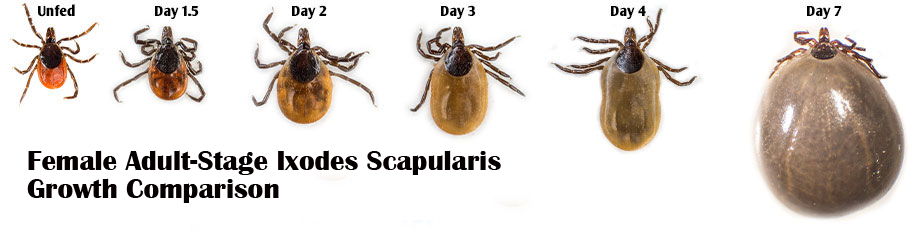
Lymes disease is present here in Nova Scotia and has also affected humans and dogs in different parts of North America. It is one of the most common tick-causing symptoms however only 5-10% of dogs are affected showing different forms of the disease. Living in Lunenburg & Queens County (NS), there seems to be a higher population of deer ticks, as well as other parts of the province. The deer ticks are the primary carrier of the disease. A tick carrying the bacteria (B.burgdorferi) that can cause Lyme disease can transmit it to a dog after filling itself with blood, which takes at least 48 hours. Even if it is attached for 48 hours, the dog may not contract the disease.
The Symptoms:
For dogs, it can take 3 weeks to 5 months to show after an affected tick bite.
“fever of between 103 and 105°, lameness, swelling in the joints, swollen lymph nodes, lethargy, and loss of appetite. Although not common, some dogs have developed severe progressive kidney disease as sequelae to Lyme disease.“
A blood test from your veterinarian is an effective way to find diagnoses of the disease.
“The standard blood test detects antibodies made by the dog in response to infection with B. burgdorferi. Many dogs show positive test results, but are not actually infected with the disease. These animals have been exposed to the organism, but fought off the infection on their own. These animals will have antibodies to B. burgdorferi but not have the disease. Thus a single positive result means only that the dog was exposed. As mentioned earlier, only around 10% of the exposed dogs actually contract the infection.”
(Source: http://www.peteducation.com/article.cfm?c=2+2102&aid=458)
There are different ways to prevent the ticks from attaching to your dog including:
Topical Insecticides, vaccinations, collars, chew-able insecticide tablets, flea & tick combs and topical sprays.
Knowing there are a lot of insecticides used in today’s treatments for fleas, ticks, flies and gnats I decided to research what could be more natural and less harmful with effective ingredients. I used to make my own fly repellent spray for my horses, so with the previous experience I know the measurements don’t have to be 100% exact.
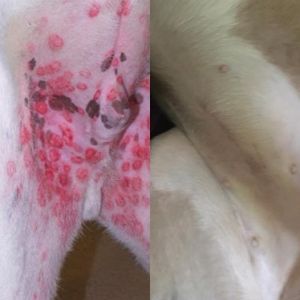
I share with you what I have found to be the most effective in flea and tick treatment for my dog! I’ve received great feedback with people saying that they’ve tried it and it’s been working great! Here is one of many:

TICK REPELLENT FOR DOGS:
40 drops of Eucalyptus
1.5 Cups of White Vinegar
2 drops of dish soap (it helps blend the ingredients)
¼ Cup of water.
DIRECTIONS:
Spray generously, daily, before going out until the coat is nice and damp. Spray in hand and rub mixture on the head and ears of your dog. Avoid contact with the eyes and muzzle.
You can add lavender oil (10-20 drops), and/or tea-tree oil(10-20 drops) to the mixture. I just use the simple recipe above and so far, it’s working great. Before I started to apply this mixture, my dog was indeed getting ticks, and since using this, there hasn’t been any!
Feel free to share this article!

 BK9
BK9 